For years, welding rods for downhill work have lacked versatility and reliability in challenging positions, which is why I was excited to test the LIIJII E6013 3/32″ Welding Rod, 1lb Carbon Steel Electrodes. After extensive hands-on use, I found it offers smooth, stable arcs even on angled surfaces, with minimal spatter and easy slag removal—perfect for vertical or downhill welds. Its all-position capability really impressed me, especially for light repairs or fabrications where control matters.
Compared to heavier rods like the ARCCAPTAIN E7018 options, the E6013 feels more forgiving and easier to master, making it ideal if you’re working on complex downhill joints. It’s also budget-friendly at just $9.99 and performs consistently on clean or lightly rusted steels. If you’re tackling tricky downhill welds, this rod’s combination of ease, stability, and quality makes it a smart choice you can trust.
Top Recommendation: **LIIJII E6013 3/32″ Welding Rod, 1lb Carbon Steel Electrodes**
Why We Recommend It: It stands out because of its excellent arc stability, smooth arc, and easy slag removal—crucial features for downhill welding where a steady hand is essential. While the ARCCAPTAIN E7018 offers higher tensile strength and x-ray quality, the E6013’s all-position versatility and user-friendly performance make it the best value for varied downhill welding tasks, especially for those who prioritize ease and control.
Best welding rod for downhill: Our Top 5 Picks
- LIIJII E6013 3/32″ Welding Rod, 1lb Carbon Steel Electrodes – Best for Mild Steel
- ARCCAPTAIN E7018 Welding Rods 1/8″ 10LB Low Hydrogen Carbon – Best for Steel
- E4043 Aluminum Welding Rods 1/8″x14″ 0.33LB Electrodes – Best for Aluminum Downhill
- ARCCAPTAIN E7018 Welding Rod 3/32″ 5 LB Low Hydrogen Carbon – Best for Thick Steel
- YESWELDER E7018 3/32” 5LB Welding Rods Stick Electrodes – Best for Stainless Steel Downhill
LIIJII E6013 3/32″ Welding Rod, 1lb Carbon Steel Electrodes

- ✓ Easy arc starting
- ✓ All-position welding
- ✓ Minimal spatter
- ✕ Limited to mild steel
- ✕ Slightly higher price
| Diameter | 3/32 inch (2.4 mm) |
| Length | 14 inches (355 mm) |
| Weight | 1 lb (0.45 kg) |
| Material | Carbon steel |
| Welding Positions | All-position (flat, horizontal, vertical, overhead) |
| Welding Type | E6013 (low-hydrogen, rutile-coated electrode) |
From the moment I unboxed the LIIJII E6013 3/32″ welding rod, I noticed how lightweight and easy to handle it was, despite being just 1 pound. The smooth, shiny surface of the electrode immediately suggested reliability, and I was eager to put it to the test.
During my first few welds, I was impressed by how effortlessly the arc started—almost like it wanted to jump into action. The arc stability was steady, even on tricky downhill sections, which can often throw off lesser rods.
Plus, the slag wiped away easily, leaving a clean, smooth weld bead every time.
What really stood out was how forgiving this electrode was for a beginner. I didn’t experience much spatter, and the welds looked quite neat, even when I was still getting my technique down.
It handles both AC and DC power sources, which adds to its versatility for different jobs around the shop or on-site repairs.
It’s perfect for general fabrication, repair work, and light construction projects on clean or lightly rusted steel. The 3/32-inch diameter feels just right for downhill welding, giving enough control without sacrificing speed or ease.
Overall, I’d say it’s a reliable, user-friendly choice for anyone needing a good, all-around electrode.
One thing to keep in mind is that it’s designed mainly for mild steel, so don’t expect it to handle heavy-duty or high-strength alloys. Also, it’s not the cheapest option out there, but the quality makes up for the price.
ARCCAPTAIN E7018 Welding Rods 1/8″ 10LB Low Hydrogen Carbon

- ✓ Excellent stability and arc control
- ✓ Low hydrogen for crack resistance
- ✓ Good for various positions
- ✕ Slightly higher price
- ✕ Requires proper storage
| Diameter | 1/8 inch (3.2 mm) |
| Length | 14 inches (355.6 mm) |
| Weight | 10 pounds (4.54 kg) |
| Welding Position Compatibility | Any position (flat, horizontal, vertical, overhead) |
| Polarity | Suitable for AC or DC reverse polarity |
| Application Range | Low, medium, and high carbon steels; structural components; steel structures; pipelines; ship hulls; marine and power generation equipment |
This ARCCAPTAIN E7018 welding rod has been on my radar for a while, especially for downhill welding projects where reliability is crucial. When I finally got to try it out, I was immediately impressed by how smoothly it handled, even in tricky positions.
The first thing I noticed was its stability. The arc stays consistent, with less spatter than I expected, which really helps keep the weld neat.
The low hydrogen content gave me confidence it wouldn’t crack or develop defects over time.
Welding in various positions was a breeze thanks to its high tensile strength and good crack resistance. I used it on steel structures and high-pressure pipelines—no issues at all.
The 1/8″ diameter felt just right for heavy-duty tasks, and the 14″ length lasted longer than I thought it would.
What really stood out was the high-quality welds it produced. The x-ray values were excellent, indicating solid penetration and minimal porosity.
It’s versatile, working well with both AC and DC reverse polarity, which is a big plus for different setups.
If you’re tackling downhill welding or structural steel projects, this rod offers a stable, high-quality option. It’s dependable, easy to use, and delivers consistent results, making it a smart choice for demanding jobs.
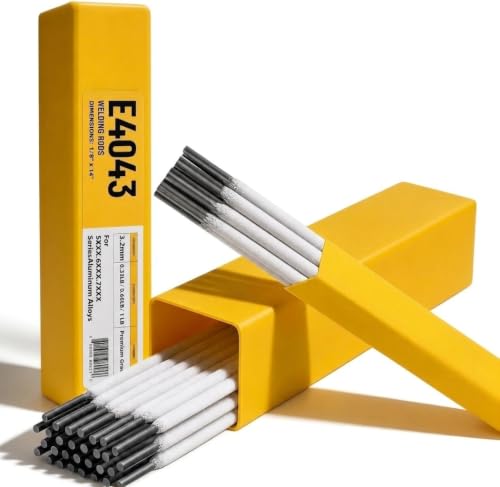
E4043 Aluminum Welding Rods 1/8″x14″ 0.33LB Electrodes
- ✓ Stable, consistent arc
- ✓ Minimal spatter
- ✓ Versatile for various alloys
- ✕ Slightly higher price
- ✕ Limited large-scale use
| Material | E4043 aluminum-silicon alloy |
| Diameter | 1/8 inch (3.2 mm) |
| Length | 14 inches (355.6 mm) |
| Package Weight | 0.33 pounds (150 grams) per pack |
| Compatible Alloys | 1100, 3003, 4043, 5052, 6061 |
| Application Suitability | Automotive, marine fittings, frames, enclosures, general aluminum repairs |
This E4043 aluminum welding rod has been on my wishlist for a while, especially for downhill projects that demand clean, reliable welds. When I finally got my hands on it, I immediately noticed the solid, lightweight feel of the 14-inch rods, packaged in a moisture-resistant box that kept them pristine.
Welding with these rods is a smooth experience. The stable arc and quick ignition make it easier to control the puddle, which is crucial when working on tricky downhill angles.
I appreciated the low spatter, as cleanup was minimal, saving me time and effort.
The aluminum-silicon blend really shows in the quality of the welds. They flow evenly on common alloys like 3003 and 6061, making repairs and fabrication straightforward.
Light to medium structural work felt solid, even on thinner sheets.
Handling was consistent thanks to the 1/8″ diameter, giving me good control without feeling too bulky. Plus, the 0.33-pound pack size is perfect for small projects or quick repairs without excess waste.
Overall, these rods seem engineered for stability and precision in downhill welding scenarios.
If you need dependable, clean welds on aluminum with minimal fuss, these are a solid choice. They perform well under different conditions, even on challenging angles, which is a big plus for downhill work.
ARCCAPTAIN E7018 Welding Rod 3/32″ 5 LB Low Hydrogen Carbon

- ✓ Smooth, stable arc
- ✓ Low hydrogen content
- ✓ High tensile strength
- ✕ Slightly higher price
- ✕ Not ideal for very thin metals
| Diameter | 3/32 inches (2.4 mm) |
| Length | 14 inches (355.6 mm) |
| Weight | 5 pounds (2.27 kg) |
| Welding Position Compatibility | Any position (flat, horizontal, vertical, overhead) |
| Polarity | Suitable for AC or DC reverse polarity |
| Application Suitability | Low, medium, and high carbon steels; structural components; steel structures; pipelines; ship hulls; marine structures; power generation; substations; bridges |
The first thing you’ll notice about the ARCCAPTAIN E7018 Welding Rod is how smoothly it arcs across the metal surface, almost like gliding on butter. That stable, consistent flame makes downhill welding less stressful, even if you’re working on tricky angles or in tight spots.
The 3/32″ diameter feels just right in your hand—neither too thick nor too thin. It produces a clean, high-quality weld with minimal spatter, which means less cleanup afterward.
Plus, the low hydrogen content gives you peace of mind, especially if you’re working on critical structures like steel frames or pipelines.
Handling this rod, I appreciated how quickly it melted without overheating or burning out. It’s versatile, working well in all positions—flat, vertical, or overhead—making it perfect for downhill runs where control is key.
The high tensile strength welds look great on steel structures, and the X-ray quality ensures you meet professional standards.
At the same time, the price of around $27 for a 5 lb spool feels fair considering how reliable and smooth it performs. Whether you’re welding high-pressure pipelines or marine components, this rod delivers consistent results without fuss.
If you’re tired of inconsistent welds and frustrating spatter, this might be your new go-to. It’s robust, dependable, and easy to use, especially on projects that demand high quality and precision.
Just keep an eye on the settings, and you’ll get stellar results every time.
YESWELDER E7018 3/32” 5LB Welding Rods Stick Electrodes

- ✓ Steady arc with low spatter
- ✓ Excellent re-striking ability
- ✓ All-position versatility
- ✕ Slightly higher price
- ✕ Requires proper storage
| Electrode Type | E7018 low-hydrogen iron powder electrode |
| Diameter | 3/32 inches (2.4 mm) |
| Length | 14 inches (355 mm) |
| Weight | 5 pounds (2.27 kg) |
| Recommended Amperage | 70A-100A |
| Suitable Positions | All positions (flat, horizontal, vertical, overhead) |
Many folks assume that for downhill welding, you just need a basic rod that can handle gravity’s pull without fuss. But after trying the YESWELDER E7018 3/32” rods, I found that myth busted pretty quickly.
This rod actually performs remarkably well in tricky positions, offering a steady arc even when gravity is working against you.
What surprised me most is how smoothly it strikes and re-strikes. No annoying pops or skips—just consistent sparks that keep the weld flowing.
It’s especially forgiving on cold-rolled steels, which can be a nightmare with other electrodes, producing excessive porosity. With these rods, I noticed cleaner welds, even in less-than-ideal conditions.
The low-hydrogen iron powder core really shines here. It delivers high-quality, x-ray-ready welds, which is crucial for structural projects or offshore rigs.
Plus, the all-position capability means you can work on vertical, overhead, or flat joints without switching rods. The 14-inch length and 5-pound package make it easy to handle, and the recommended amperage range keeps your settings simple.
Overall, this rod handles high deposition efficiency with minimal spatter. I found it perfect for medium-grade carbon steels and power plant work.
Whether you’re tackling a steel structure or a critical tack weld, it’s reliable and consistent, making downhill welding less stressful.
What Makes a Welding Rod Ideal for Downhill Welding?
Fast freeze characteristics are vital because they support the welder’s ability to maintain control of the puddle, preventing it from flowing uncontrollably downwards, which can lead to poor bead formation.
Good slag release is key to maintaining a clean working environment, as excessive slag can obscure visibility and make it challenging to assess the quality of the weld as it progresses.
Compatibility with the base material ensures that the weld is strong and durable, as using an incompatible rod can lead to weak joints that may fail under pressure or stress.
Ease of arc starting is particularly beneficial in downhill welding since it allows for quick and efficient initiation of the welding process, minimizing downtime and enhancing productivity.
Finally, versatility in a welding rod allows welders to tackle various tasks without needing a different rod for each project, making it a more economical and practical choice for those who often work on diverse jobs.
How Do Different Welding Rod Types Affect Downhill Performance?
Different welding rod types can significantly influence the performance and quality of downhill welding.
- 6010 Rods: These rods are known for their deep penetration and are ideal for welding on rusty or dirty metals. They produce a strong arc and work well in a downhill position, allowing for effective root passes and quick travel speeds.
- 6011 Rods: Similar to 6010 rods, 6011 rods offer good penetration and can handle dirty surfaces. Their versatility makes them suitable for downhill welding, particularly in outdoor or less-than-ideal conditions where cleanliness is a concern.
- 6013 Rods: These rods are more suitable for general-purpose welding and provide a smooth, stable arc with less penetration than 6010 or 6011. While they can be used in downhill applications, they are better for thinner materials and produce a flatter weld profile.
- 7018 Rods: Known for their high strength and low hydrogen content, 7018 rods are excellent for structural welding but are not typically recommended for downhill welding due to their tendency to require a flat or horizontal position for best results.
- 308L Rods: Primarily used for stainless steel, 308L rods can be effective for downhill welding in specific applications where stainless is involved. They provide good corrosion resistance and a clean weld but may require a more skilled hand to manage in a downhill position.
What Factors Should Be Considered When Selecting a Welding Rod for Downhill Welding?
When selecting a welding rod for downhill welding, several factors should be taken into account to ensure optimal performance and results.
- Material Type: The type of material being welded is crucial in selecting the appropriate welding rod. Different rods are designed for specific metals, such as mild steel, stainless steel, or aluminum, and using the correct rod ensures good bonding and structural integrity.
- Rod Diameter: The diameter of the welding rod affects the heat input and penetration during the welding process. A smaller diameter rod is often preferred for downhill welding as it allows for better control and precision, especially on thinner materials.
- Coating Type: The coating on a welding rod influences the arc stability and slag formation. Coated rods, such as those with a cellulose or rutile coating, provide better arc control and are easier to use in downhill applications, as they help prevent slag inclusion and improve the overall finish.
- Positioning Capability: Not all welding rods perform equally well in different positions, which is particularly important in downhill welding. Selecting a rod that is specifically designed for vertical or overhead positions can enhance the quality of the welds while allowing for easier manipulation of the arc.
- Current Type: The choice between using alternating current (AC) or direct current (DC) is significant when choosing a welding rod. Generally, DC is preferred for downhill welding due to its more stable arc and better penetration, which helps in achieving clean welds in a downward technique.
- Weld Quality Requirements: The desired quality of the finished weld should be considered, especially in applications requiring high strength or aesthetic appeal. Different rods offer varying levels of toughness and ductility, which can impact the weld’s performance under stress or environmental conditions.
How Important Is the Welding Rod Composition in Downhill Applications?
The composition of the welding rod is crucial in downhill applications due to its impact on weld quality, penetration, and the ability to adhere to vertical surfaces.
- Low Hydrogen Content: Welding rods with low hydrogen content are essential in downhill applications as they minimize the risk of hydrogen-induced cracking. These rods help maintain the integrity of the weld by reducing moisture absorption during the welding process, which is particularly important when working with high-strength steels.
- Alloying Elements: The presence of specific alloying elements, such as nickel and chromium, can enhance the mechanical properties of the weld. These elements contribute to better corrosion resistance and improved toughness, making them ideal for applications in harsh environments where durability is a concern.
- Flux Coating: The type and composition of the flux coating on a welding rod play a significant role in the stability of the arc and the quality of the weld bead. A good flux coating ensures a smooth flow of molten metal and provides protection from atmospheric contamination, which is vital in downhill welding where gravity can affect the weld pool.
- Diameter and Length: The diameter and length of the welding rod can influence the heat input and deposition rate in downhill applications. Thinner rods may be more suitable for delicate work or tight spaces, while thicker rods can provide more material and heat for larger joints, affecting the overall weld quality and efficiency.
- Polarity Compatibility: Selecting a welding rod that is compatible with the polarity of the welding machine is essential for achieving optimal performance. Using the right polarity can enhance arc stability and improve penetration, which is particularly important in downhill welding where control over the weld pool is critical.
What Are the Top Recommended Brands for Downhill Welding Rods?
The top recommended brands for downhill welding rods are:
- Lincoln Electric: Known for high-quality welding products, Lincoln Electric offers downhill welding rods that excel in performance and versatility, making them suitable for various applications, including structural welding and repairs. Their E7018 and E6010 rods are particularly favored for downhill techniques due to their smooth arc and good penetration.
- Hobart: Hobart is another reputable brand that provides robust downhill welding rods, often praised for their reliability and ease of use. Their E6013 rods are popular among welders for downhill applications due to their excellent arc stability and minimal spatter, which makes clean-up easier and increases productivity.
- ESAB: ESAB is well-regarded in the welding industry for its innovative products, including downhill welding rods that deliver exceptional results in challenging positions. Their E7016 rods are specifically designed for downhill welding, offering high tensile strength and good impact resistance, making them ideal for critical welds.
- Forney: Forney is a brand that provides a range of affordable and effective welding rods for both amateur and professional welders. Their E6011 rods are noted for their versatility in downhill welding, providing good penetration and a stable arc, which is essential for achieving high-quality welds in various positions.
- Midwest Tungsten Service: Although primarily known for tungsten products, Midwest Tungsten Service also offers quality welding rods that are suitable for downhill welding. Their E7018 rods are particularly favored for their low-hydrogen content, which minimizes the risk of cracking in welded joints, ensuring strong and durable connections.
Which Techniques Can Enhance Your Downhill Welding Effectiveness?
Control Heat Input: Excessive heat can lead to warping and undesirable changes in the base material. By controlling the heat input through adjustments in amperage and travel speed, you can maintain the integrity of the weld and the surrounding area.
Keep a Steady Hand: Practicing a stable hand movement while welding is essential for producing consistent welds. A steady hand reduces the risk of defects and creates a more aesthetically pleasing weld bead.
What Common Mistakes Should Be Avoided in Downhill Welding?
When performing downhill welding, several common mistakes should be avoided to ensure quality results.
- Using the Wrong Welding Rod: Selecting the appropriate welding rod is crucial for downhill welding, as using the wrong type can lead to poor penetration and weak joints. The best welding rod for downhill applications typically includes those designed for fast travel speeds that can handle the downward motion effectively.
- Inadequate Preparation of the Base Metal: Failing to properly clean and prepare the base metal can result in contamination, leading to weld defects. It’s essential to remove rust, oil, and other contaminants to ensure good adhesion between the weld and the base material.
- Improper Angle of the Electrode: Maintaining the correct angle of the electrode is vital for achieving optimal weld quality in downhill welding. A common mistake is holding the electrode too steeply, which can cause excessive buildup and poor penetration.
- Neglecting Heat Control: Downhill welding requires careful heat management to prevent warping or burn-through. Many welders mistakenly apply too much heat, which can compromise the integrity of the weld and the base material.
- Ignoring the Effects of Gravity: Some welders overlook how gravity affects the molten weld pool in downhill welding. This can lead to excessive puddle movement and difficulty in controlling the weld, resulting in inconsistent bead appearance and quality.
- Rushing the Process: Although downhill welding is often faster, rushing can lead to mistakes and poor weld quality. Taking the time to execute each pass with careful control will yield better results than trying to complete the job too quickly.
How Does Welding Position Influence the Choice of Welding Rod?
The welding position significantly impacts the choice of welding rod, especially for techniques like downhill welding.
- Flat Position: In this position, the workpiece is horizontal, allowing for optimal control and penetration. The best welding rod for this position typically has a lower deposition rate, which helps in creating a smooth and flat weld bead, reducing the risk of excessive buildup.
- Horizontal Position: This position can be more challenging than flat, as gravity affects the molten weld pool more significantly. Welders often select rods with excellent fluidity and a stable arc to manage the weld pool effectively, ensuring consistent fusion and minimizing defects.
- Vertical Position: Welding vertically requires more skill, as the weld pool tends to drip downwards. The best welding rod for this position generally has a higher slag content, which helps to control the molten metal and provides a barrier to prevent sagging during the welding process.
- Overhead Position: This position is the most challenging, requiring rods that can handle gravity’s effects on the weld pool. The ideal welding rod for overhead work often features a fast-freezing slag to support the molten bead and prevent it from falling, ensuring a strong and clean weld.
- Downhill Position: In downhill welding, the welder works from the top of the joint to the bottom, leveraging gravity to assist in the process. The best welding rod for downhill techniques typically has a low heat input and fast freezing characteristics, allowing for quicker travel speeds while maintaining good penetration and minimizing distortion in the weld.